The Core of Concrete: What Is It Really Made Of?
Look down. You are likely standing on it, or at least near it. You might park your car on it every evening. It forms the backbone of our cities, the foundation of our homes, and the pathways that connect our neighborhoods. Concrete is the most widely used human-made material on the planet. It is second only to water as the most consumed substance in general. Yet, despite being literally everywhere, it remains a mystery to most people. When you start a home improvement project or a commercial build, you rely on this material to last for decades. But do you know what goes into the mixer? Do you know the difference between "cement" and "concrete"?
At Concrete Gilbert, we believe that transparency builds trust. We don't just pour slabs; we engineer solutions. Understanding the science behind the material helps you appreciate the value of professional installation and helps you make informed choices for your property.
This guide will take you deep into the core of concrete, breaking down the raw materials that give it strength and explaining how we combine them to build a solid future for your project.
The Great Misconception: Cement vs. Concrete
Before we dive into the specific ingredients, we need to clear up the most common confusion in the construction world. You will often hear people say "cement sidewalk" or "cement mixer." Technically, there is no such thing as a cement sidewalk. Cement is an ingredient. Concrete is the finished product. To put it in culinary terms: cement is the flour; concrete is the cake. You wouldn't invite friends over for a slice of flour, and you wouldn't drive your car on a driveway made only of cement powder.
Concrete is a composite material. It is a mixture of paste and aggregates. The paste, composed of cement and water, coats the surface of the fine and coarse aggregates. Through a chemical reaction called hydration, the paste hardens and gains strength to form the rock-like mass known as concrete.
Ingredient #1: The Binder (Portland Cement)
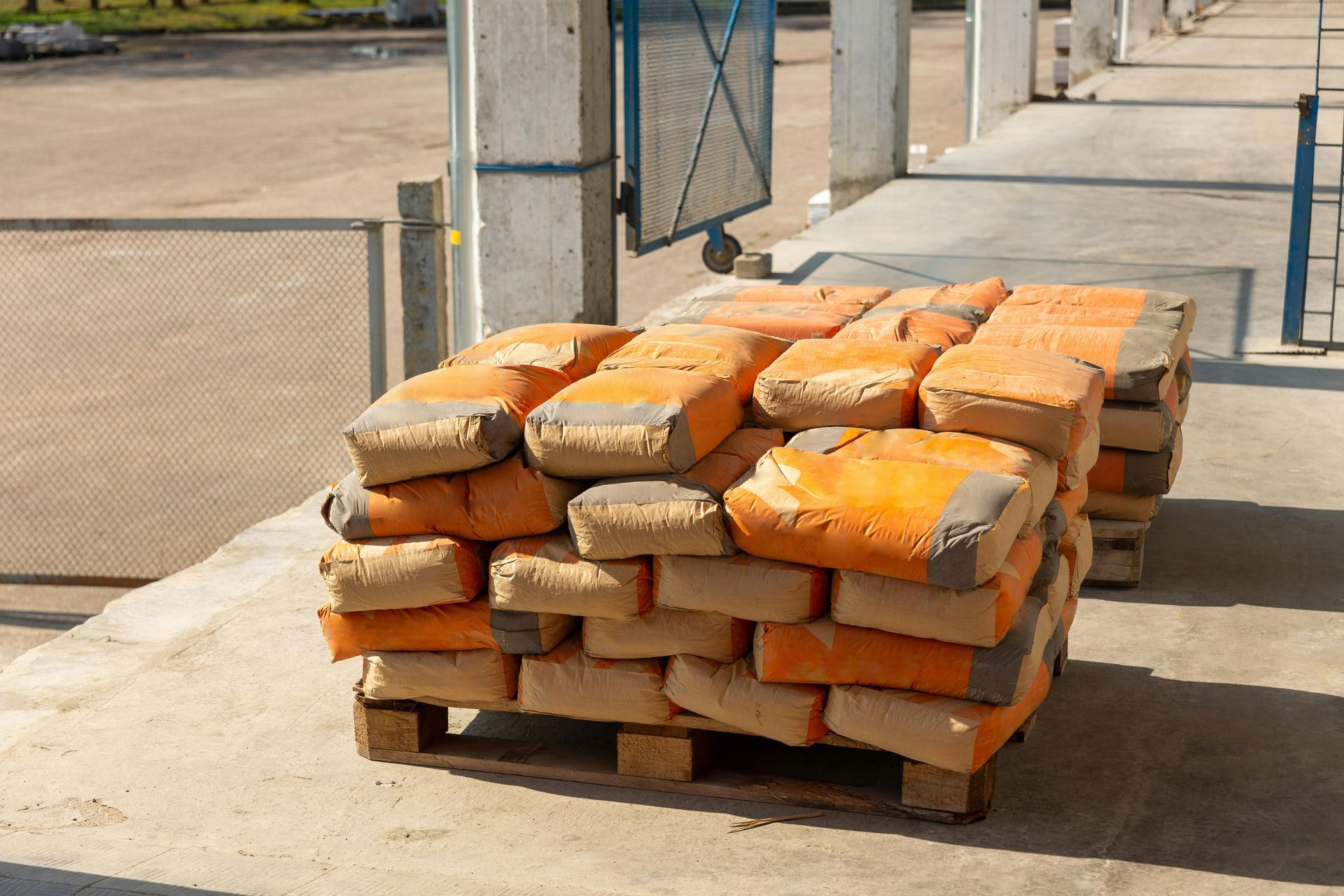
The "magic" in the mix comes from the cement. This is the grey powder that acts as the glue holding everything else together. Most concrete used today employs Portland cement. It isn't a brand name; it's a generic term for the type of cement used in almost all concrete, mortar, stucco, and non-specialty grout.
How It’s Made
Cement production is a massive industrial undertaking. It starts with raw materials rich in calcium, silica, alumina, and iron. These usually come from limestone, clay, shells, and sand. These raw materials are crushed and heated in a gigantic rotating kiln at temperatures reaching 2,700 degrees Fahrenheit. This intense heat causes the materials to fuse into marble-sized clumps called "clinker." The clinker is cooled and then ground into the super-fine powder we know as cement.
The Role of Chemistry
When this powder meets water, it doesn't just "dry out" like mud. It undergoes a chemical reaction called hydration. During hydration, crystals grow from the cement particles. These crystals interlock with each other and with the aggregates, creating a dense, solid matrix. This process generates heat and is the reason concrete gets warm as it sets.
Ingredient #2: The Muscle (Aggregates)
If cement is the glue, aggregates are the muscle. They provide the structural skeleton of the concrete. Aggregates make up the vast majority of the volume in a concrete mix—typically 60% to 75%. Because they occupy so much space, the quality of the aggregates is critical to the quality of the concrete. They aren't just filler; they provide compressive strength and durability. We separate aggregates into two main categories:
Fine Aggregates (Sand)
This consists of natural or manufactured sand with particles usually smaller than 3/8 of an inch. The primary job of the sand is to fill the voids between the larger rocks. This creates a tight, dense mix that prevents water from seeping through.
Coarse Aggregates (Gravel or Stone)
These are particles greater than 0.19 inches, but typically range between 3/8 and 1.5 inches in diameter. Crushed stone or river gravel are common choices. These large stones bear the weight. When a heavy truck drives on your driveway, the load is transferred through these stones. At Concrete Gilbert, we pay close attention to the shape and texture of aggregates. Rough, angular stones tend to lock together better than smooth, round river rocks, providing higher strength. We also ensure our aggregates are clean. Dirt, clay, or organic matter on the rocks can prevent the cement paste from bonding properly, leading to weak spots and future failure.
Ingredient #3: The Activator (Water)
Water is the catalyst. Without it, the cement powder remains inert. It kicks off the hydration process that turns a pile of dust and rocks into a solid slab. However, water is also the most dangerous ingredient in the mix if not managed correctly.
The Goldilocks Zone
The relationship between the amount of water and the amount of cement is called the "water-cement ratio." This is the single most important factor controlling concrete quality.
- Too Much Water: Adding extra water makes the concrete soupy and easy to pour. It flows into corners nicely and takes less effort to smooth out. But this is a trap. The excess water that isn't used for hydration eventually evaporates, leaving behind millions of microscopic pores. This makes the concrete weak, prone to cracking, and susceptible to freeze-thaw damage.
- Too Little Water: If the mix is too dry, it is unworkable. It creates air pockets (honeycombing) and prevents a strong bond between the paste and the rocks.
The goal is to use the absolute minimum amount of water necessary to make the concrete workable. This ensures a tight, strong, and durable finish.
The Secret Sauce: Admixtures
Modern concrete science has given us a fourth category of ingredients: admixtures. These are chemicals added to the mix in small amounts to tweak its behavior. In the Gilbert climate, where temperatures can soar, admixtures are vital.
- Retarders: In 110-degree heat, concrete can set up (harden) incredibly fast—sometimes too fast to finish properly. Retarders slow down the chemical reaction, buying our crew precious time to float and trowel the surface to perfection.
- Plasticizers (Water Reducers): These chemicals charge the cement particles so they repel each other, making the mix flow more easily without adding extra water. This allows us to pour high-strength, low-water concrete that is still workable.
- Air-Entrainers: These create billions of microscopic air bubbles in the hardened concrete. If water enters the concrete and freezes, it expands into these bubbles rather than cracking the stone.
How Concrete Gilbert Uses This Knowledge for You
You cannot buy a bag of pre-mix at the hardware store and expect the same results as a scientifically engineered mix delivered by a ready-mix truck. At Concrete Gilbert, we don't guess. We understand the chemistry.
Custom Mix Design
We specify the mix based on your project's needs. A patio that only sees foot traffic has different requirements than a driveway that holds an RV. We adjust the aggregate size, the cement content, and the admixtures to suit the load and the local environment.
Managing the Gilbert Heat
Our local experience is our greatest asset. Pouring concrete in the desert heat requires specific strategies. We know how to keep the substrate moist so it doesn't suck water out of the concrete too fast. We know when to apply curing compounds to lock moisture in, allowing the hydration process to continue for weeks, which significantly increases the final strength of the slab.
Quality Control
Because we understand the components, we know what to look for when the truck arrives. We check the "slump" (consistency) of the wet concrete to ensure the water ratio is correct. We inspect the aggregates visually. We ensure that what goes into your project meets the highest standards of the industry.
Building on a Solid Foundation
Concrete is more than just grey mud. It is a complex chemical system that, when handled correctly, becomes one of the most durable materials on earth. By understanding the core components—cement, aggregates, and water—you can see why professional installation matters. It’s not just about labor; it’s about managing a chemical reaction to build something permanent. Your home or business deserves a foundation that is built on science, skill, and experience. Don't leave your project to chance. Ready to discuss your next project with a team that knows the science behind the slab? Contact Concrete Gilbert today for a consultation. Let’s build something solid together.
Meta Information
Meta Title: What Is Concrete Made Of? | Concrete Gilbert Material Guide
Meta Description: Concrete is more than just cement. Concrete Gilbert explains the core ingredients—aggregates, paste, and water—and how they create a durable slab.